
Bridging the Clarity Gap in Mission-Critical Operations
5 Ways Network Control Rooms Eliminate Bottlenecks and Accelerate Decision-Making.
When a mission-critical event unfolds, the first thing to go isn’t usually the power; it’s clarity. Whether you are managing municipal emergency services, utility grids, or specialized government operations, the gap between something happening and action taken is where the most significant risks live.
A network control room, or network operations center (NOC), acts as the nervous system of an organization. It’s the place where massive streams of data are distilled into actionable intelligence. However, if that room is built on aging infrastructure or fragmented systems, it quickly becomes a bottleneck rather than an efficiency tool.
Below, we explore five ways a modernized, integrated control room streamlines operations and, more importantly, protects lives—keep reading to learn more!
SEE ALSO: Avoid the AV Headaches with M3 Vision
1. NOCs Establish a Single Source of Truth
In high-stakes environments, the greatest enemy is the information silo. If your security feed is on one monitor, your network health on another, and your field communications on a third, your team is forced to act as the human bridge between disjointed systems.
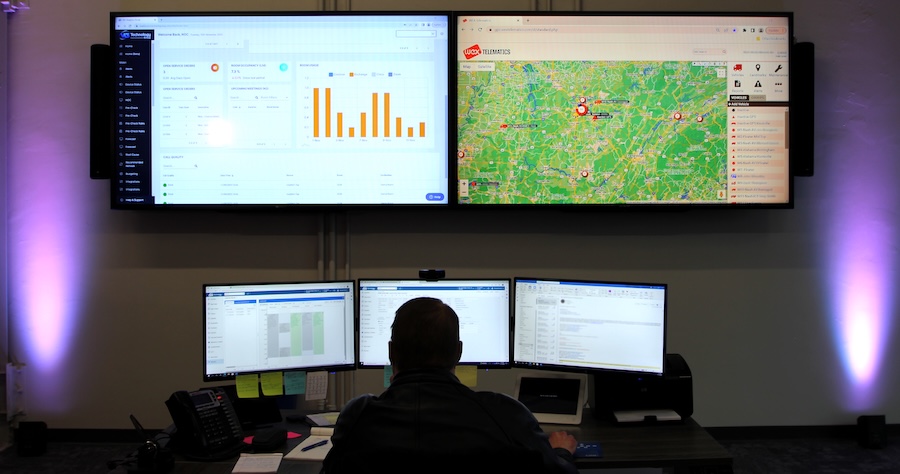
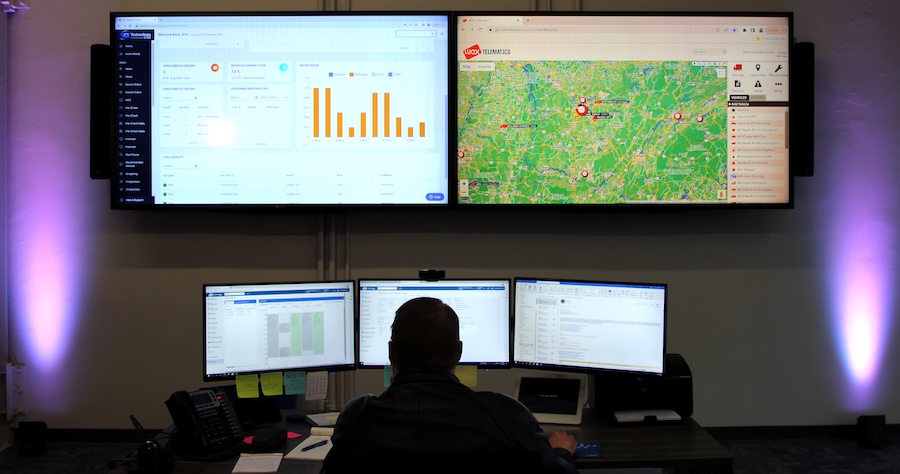
Our goal as a commercial AV integrator is to eliminate this friction by creating a common operational picture. By integrating diverse data feeds into a unified video wall, decision-makers see a single, real-time truth. In emergency management or defense-adjacent roles, this unified view keeps everyone in the room apprised of the situation at hand, enabling them to work from the same map and reducing the risk of miscommunication when seconds matter most.
2. Accelerate the Decision-Making Loop
Military strategists often refer to the OODA loop: Observe, Orient, Decide, and Act. The goal of a control room is to move through that loop as quickly as possible.
In a legacy setup, diagnosing a remote failure in a facility near Huntsville or a logistics hub in Houston might require multiple phone calls and manual data pulls. A command and control room built on Networked AV (AV over IP) allows operators to pull any remote feed to the main display instantly. Improved response speeds allow for proactive responses—stopping a minor technical glitch before it escalates into a public safety or operational crisis.
3. Combat Cognitive Load and Fatigue
Operating a 24/7 control room is an exhausting mental exercise. If the room is poorly lit, the acoustics are echoing, and the screens are improperly angled, operator fatigue becomes inevitable.
Effective control room design focuses on the human element. This includes:
- Tunable Lighting: Adjusting color temperatures to keep staff alert during overnight shifts.
- Acoustic Treatment: Reducing background hum so that critical verbal commands are heard clearly.
- Ergonomics: Sightlines to the video wall shouldn’t cause physical strain over an eight-hour shift. When the environment supports the human, the human is less likely to make the kind of small errors that lead to large-scale failures.
4. Secure Scalability Across Distributed Sites
Government operations today are rarely contained in a single building. You likely have satellite offices in Nashville, Knoxville, Birmingham, or Huntsville that all need to report back to a central hub.
Our AV specialists design these rooms to be network-first, meaning you can share encrypted, high-definition video and data across your entire footprint without losing quality or compromising security. Scalability like this means headquarters in Middle Tennessee have the same situational awareness as your field teams in North Alabama or Greater Houston.
5. NOCs Are a Single-Point Accountability for Always-On Reliability
One of the biggest hidden risks in production and control environments is vendor sprawl. If your audio is from one vendor, your screens from another, and your structured cabling from a third, you face a nightmare of finger-pointing when a system goes down.
Partnering with an integrator who manages the entire lifecycle, from design and engineering to support, gives you a single point of accountability for your mission-critical systems. This integrator model ensures that every component is tested to work in harmony, backed by proactive monitoring that catches hardware failures before they can impact your mission.
Ready for Greater Efficiency Powered by Intelligence
A control room shouldn’t just be a place where you watch things happen; it should be the place where you control the outcome. By prioritizing a unified design, human-centric ergonomics, and secure networked infrastructure, you aren’t just upgrading your tech, you’re protecting your most valuable assets: your people and your mission.
Is your command center ready for the demands of the future? Request a mission-critical consultation today!


