Staying Ahead in Higher Education AV
Top AV Trends and Why It’s Time to Upgrade Your Campus Systems
Universities face unprecedented pressure. Enrollment fluctuates, student expectations rise, and budgets are under scrutiny. AV systems that once were considered “nice to have” now serve as critical institutional tools. M3 Technology Group designs enterprise-grade AV tailored for higher‑education campuses. Below are the significant trends shaping AV strategy in the industry, along with the lifecycle timing that every campus leader should know—keep reading.
Key AV Trends in Higher Education
Institutions that maintain relevance invest in AV systems that mirror evolving learning models. Here are the leading trends:
- Active Learning + Hybrid Classrooms
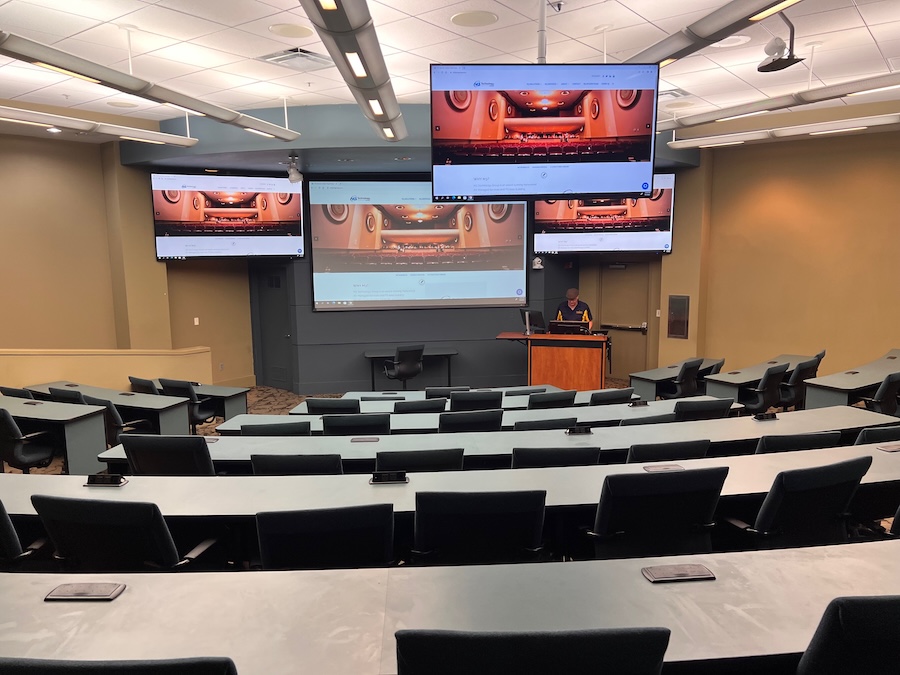
Now, traditional lecture halls are shifting toward becoming spaces that support interaction, collaboration, and remote presence. Features such as wireless presentation tools, multiple camera angles, and lecture-capture systems provide students with options and flexibility. - Data‑Driven Insights for Engagement
AV systems now collect usage, occupancy, and performance data. When campuses integrate learning management systems, sensors, and analytics platforms, administrators gain insight into room utilization and student behavior. That visibility supports retention and informs refresh decisions. - Scalable Connectivity + AV‑over‑IP
Networked AV (AV‑over‑IP) is rapidly becoming standard. A consistent signal path across campus buildings enables flexible space usage, simplified deployment, and future readiness. Wireless connectivity and USB‑C device compatibility further reflect user expectations. - Immersive Learning Environments
VR/AR labs, esports arenas, and advanced digital signage are no longer fringe projects. Institutions leverage immersive AV experiences to attract students and provide edge‑skills training.
Understanding AV Lifecycles: When Is It Time to Upgrade?
Knowing the lifecycle of AV investments ensures budget predictability and system reliability.
- According to lifespan guidelines, many display devices and control systems operate effectively for 5–7 years before major replacement.
- High-use components, such as video conferencing hubs and lecture-capture gear, may need renewal within 3–5 years, given the rapid pace of software and standard changes.
- A report specific to higher education noted that many universities operate on 3–5 year refresh cycles for learning spaces, even though some equipment outlasts that timeframe.
Given student expectations and hybrid/remote models, postponing upgrades increases risk: outdated classrooms undermine recruitment, retention, and operational efficiency.
Why Now Is the Time to Act
Upgrade decisions can no longer wait on the back burner. Several business‑critical drivers demand timely AV investments:
- Competition for students: Digital‑native learners expect connectivity, flexibility, and interactivity. A campus that lags sends the wrong message.
- Operational clarity and cost control: Data‑enabled AV systems provide analytics on usage, enabling simpler scheduling, maintenance, and budgeting.
- Legacy systems hold hidden costs: Older AV gear often requires more maintenance, suffers more downtime, and depreciates faster. Proactive replacement avoids those burdens.
- Pedagogy is evolving fast: As institutions adopt hybrid delivery, immersive spaces, and collaboration labs, AV must support those models instead of hindering them.
At M3 Technology Group, we partner with higher‑ed institutions across their entire AV lifecycle. We deliver planning, installation, ongoing support, and strategic refresh planning tailored to campuses nationwide.
Ready to Modernize Your AV Strategy?
Contact M3 Technology Group to schedule a discovery session and map out your upgrade cycle, refresh roadmap, and future‑ready AV infrastructure.


