
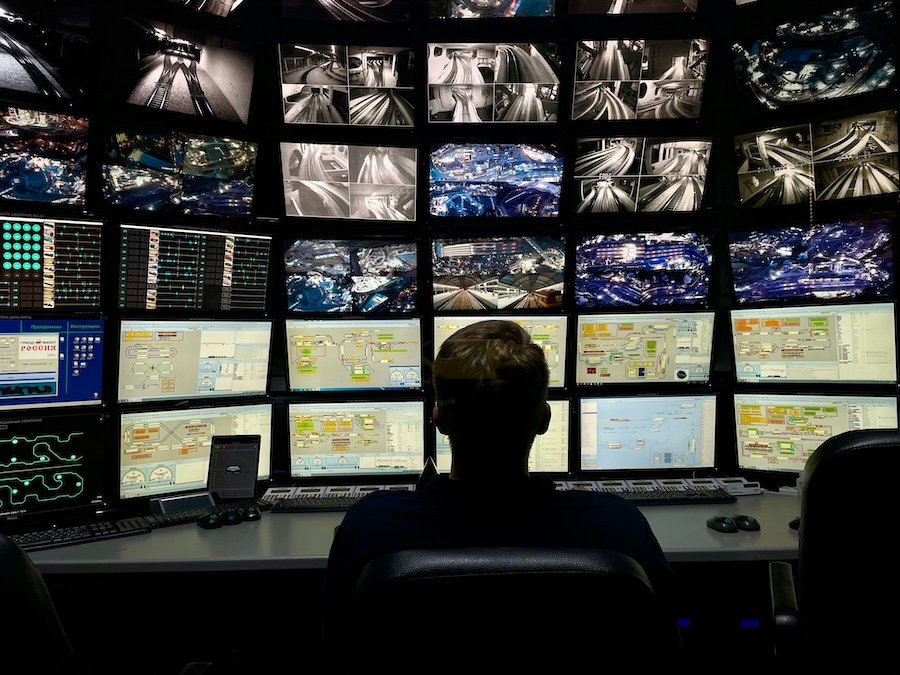
Streamline Critical Data Flows Inside High-Stakes Operations Centers
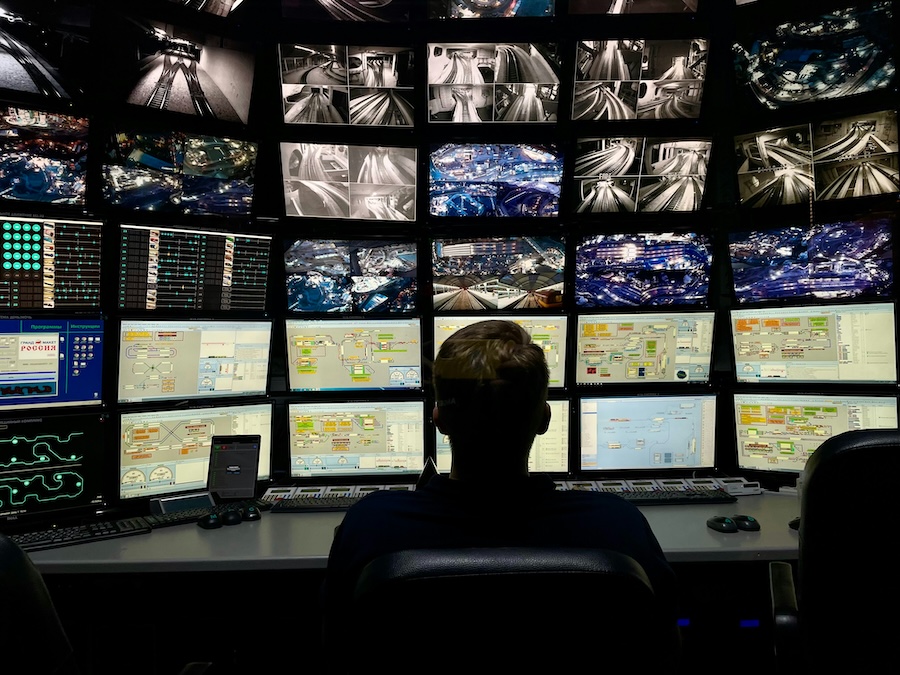
Modernizing Network Operations Centers to Accelerate Strategic Decisions
High-stakes environments leave zero room for error when a critical threat unfolds. The immediate challenge rarely stems from a lack of data, but emerges from an overwhelming flood of it. Safeguarding critical infrastructure and coordinating emergency responses across distributed networks requires immediate threat neutralization.
A Network Operations Center (NOC) serves as the strategic core of an organization. Poor design and infrastructure render this command-and-control room an operational failure.
Learn how a professionally designed, purpose-built control room will streamline complex operations and secure your mission below.
Mission Assurance Under Adversity
A control room serves as a monitoring hub and an essential command layer, maintaining network availability and coordinating cyber defense to keep critical missions operational amid disruptions, attacks, or outages.
Redundant Failover and Continuity of Operations
Mission-critical environments require system survivability. Relying on standard consumer or low-tier commercial AV hardware introduces single points of failure that jeopardize entire operations during a crisis.
Elite engineering integrates automated, hardware-level redundancy into the control room architecture. Primary systems link directly to hot-swappable backup processors and secondary network paths, switching feeds instantly without human intervention. Zero downtime leaves your organizations uncompromised, and ensures operational continuity even during severe hardware degradation or localized power loss.
Secure Information Isolation and Multi-Domain Handling
Managing concurrent operations across multiple classification levels demands strict data isolation. Forcing operators to switch physically between separate machines or hardware environments compromises tactical velocity and heightens the risk of data leaks.
Command architecture solves this by enforcing hardware-based KVM (Keyboard, Video, Mouse) isolation and secure matrix switching. Operators securely manipulate multiple isolated networks, spanning unclassified commercial data to highly restricted internal streams, from a single console without cross-contamination. This encrypted architecture maintains security while streamlining user workflow.
Predictive Maintenance
Reactive maintenance models invite catastrophic operational failures during active deployments. Waiting for a display wall or a network switch to fail before plannign for repairs introduces unacceptable windows of systemic vulnerability.
Our M3 Vision plan monitors system health proactively. Networked diagnostic software constantly tracks thermal thresholds, pixel degradation, and bandwidth utilization. Identifying technical anomalies before they manifest as physical failures transforms maintenance from an emergency response into a scheduled, non-disruptive optimization.
Accelerated Onboarding and Tactical Standardization
Complex, non-standardized user interfaces degrade team performance and extend training timelines for new personnel. Varied control schemes across different rooms or facilities introduce unnecessary cognitive stress and slow down execution during high-stress maneuvers.
Standardizing the user interface across the entire command enterprise establishes immediate operational familiarity. Intuitive, unified touch panels and predictable software workflows eliminate guesswork, allowing operators to focus entirely on incoming threat data. Systemic uniformity reduces training overhead and enables personnel to scale across multi-site centers instantly.
Establish the Strategic Advantage with M3 Technology Group
A control room must dictate the outcome. Standardizing situational awareness protects infrastructure, data, and personnel.
Optimize your command and control centers to meet the operational demands of not only 2026, but a decade from now and beyond. Request an AV consultation wtih our experts today.


